Sports Medicine


GHSA Partner in Sports Medicine

New Study by Bauerfeind on ACL Injuries

The effectiveness of orthoses following rupture of the anterior cruciate ligament.

www.bauerfeind.com/specials/life/bf_life_international_0211/index.html?pageNumber=24

GHSA Welcomes Bauerfeind

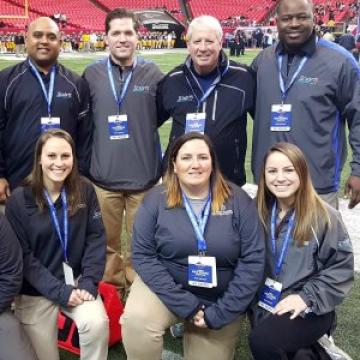
The GHSA welcomes Bauerfeind (bauerfeindusa.com) as a new licensee who is located in Atlanta. Bauerfeind produces product solutions in orthopedic bracing, compression therapy, and foot orthopedics that can make an important contribution to the maintenance and recovery of health - for better athletic performance. Through our close working relationships with physicians, medical retailers and patients, Bauerfeind is able to be an innovative and reliable partner. With a strong international presence in professional as well as collegiate sports, Bauerfeind is now aiming at bringing solutions and expertise to US High Schools through a closer cooperation with coaches and trainers. Your representative is: Vicky Smith at 404-660-9157 or vsmith@bauerfeindusa.com.

Click here to view the Bauerfeind Life Magazine

Zero Infections

How do we get to Zero? The Netherlands (Population 16,783,092) decided to eliminate MRSA infections from their hospitals and were successful. We should be able to do the same in a wrestling room (population 45)!

As discussed at the NWCA Convention in August, if you were able to sterilize your wrestling room – clean enough to safely perform open heart surgery, as soon as you let your wrestlers in the odds of an infection would jump up to over 30%. This is just if they have an average amount of bacteria on their skin. In this area, wrestlers tend to be well above average.

Cleaning mats and surfaces is an extremely important part of infection prevention, but the true battle ground is the skin. Protect the skin and you have a running start on infection prevention.

Here are some steps to reduce the risk of infections in your program:

INFECTION PREVENTION CHECKLIST

Education

  • ALL wrestlers must understand their compliance is critical to a working plan.

Surfaces

  • Clean mats (floor and wall) with a product approved by the EPA to kill MRSA
  • Observe all label instructions
    • Wet Contact Time
    • Safe Storage Time (before it should be discarded)
  • Very few products will kill spores (which can lead to ringworm)
    • A 10:1 bleach mix has been reported to kill spores
    • Some other surface products will kill spores (nothing used on the skin will kill spores)
    • Some antimicrobial surface treatments have spore killing claims
    • Do not let people on your mats in bare feet (ringworm)

Equipment

  • Clean equipment with a product that is approved by the EPA to kill MRSA
  • Make sure shoes and pads are completely dry overnight
    • Add fans to assist in drying

Laundry

  • Make sure all fabrics are completely dry coming out of the dryer
  • Do not put clean clothing back in a container that previously held dirty clothes (gym bag or large facility laundry cart)
  • Do not put shower shoes in the bag that clean clothes are in

Skin

  • Showers
    • Shower immediately after practice and competition - before leaving the facility
      • If the facility does not have a shower, wash hands and arms with Hibiclens before leaving.
      • Go directly to a shower from the facility
    • Wash feet thoroughly (ringworm)
    • If you are using a regular soap or shampoo, make sure Hibiclens is your final wash.
  • Washing with Hibiclens prior to contact will significantly reduce the risk of transfer of bacteria and viruses[1].
    • If a shower is not possible, wash hands, arms and face prior to competition
  • Notify coaches if you feel a herpes outbreak beginning so appropriate action can be taken to reduce the outbreak time and protect the team.

Ask to see clinical, third party testing on all claims being made by products that seem outside of normal

If you would like to hear more detail about any area of this plan, contact your Hibiclens Representative at www.hibiclens.com or 1-800-805-0585 x7940

For a printable checklist click here.

[1] MHC Study #061123-150.01

New CDC Concussion Course

The Centers for Disease Control and Prevention (CDC) has shared with the NFHS a new FREE online training they created to provide health-care professionals with an overview of what they need to know about concussion among young athletes. The goal of this course, Heads Up to Clinicians: Addressing Concussion in Sports among Kids and Teens, is to prepare health-care professionals to diagnose and manage concussions on the sidelines, in their office, training room, or in the emergency department.

Click Here to Start the Course


Survey Request from the NWCA and Hibiclens

Coaches:

We are requesting 5 minutes of your time to gather more information on the state of skin infections in wrestling and what steps are being taken to combat them. We will be able to use this information to benefit wrestling and provide best practices information to everyone. Once completed, we will share the information with everyone.

Please help us gather this information.

Go to this link to fill out this short 10 question survey: http://www.zoomerang.com/Survey/WEB22D3X5JTKPE/

Skin Infection Prevention Survey Results

A short skin infection prevention survey was completed at the NWCA Convention several weeks ago (Click here to view the survey results). Preventing skin infection is relatively easy with some simple protocol. REMEMBER THAT STATISTICALLY SPEAKING, APPROXIMATELY 65 – 70% OF ALL SKIN INFECTION IN WRESTLING IS TRANSMITTED FROM SKIN TO SKIN.

So, the value of a gold standard product like Hibiclens is that its active ingredient, CHG 4% has a 6 hour residual “kill time on the skin. Please also be advised that the other ingredients within Hibiclens make it more gentle to the skin as compared to other anti-microbial products.

Heat, Hydration, and Lightning Information from the NFHS Sports Medicine Advisory Committee

The following links contain information and resources on heat, hydration and lightning from the NFHS Sports Medicine Advisory Committee (SMAC). Please review and feel free to pass this information along to coaches, trainers, athletes and parents.

Use of Energy Drinks by Young Athletes
Fluid Replacement and Dehydration
Heat-Related Illness
Lightning Safety
Health and Wellness
Guidelines for Lightning
Recommendations for Hydration
Sickle Cell Trait

Heat Illness Update

The NATA and the National Safe Kids Campaign have prepared guidelines for use by parents and coaches for combating heat-related illness, including an activity schedule based on temperature and humidity levels:

Parent and Coaches Guide to Heat

With the record-breaking heat wave that has recently swept the south, athletes and coaches need to take extra precautions when exercising outdoors. As the temperatures remain in the 90s and the humidity is high, the risk of suffering a heat related illness increases. In addition to football players, athletes involved in other sports like cross country, summer baseball, softball, lacrosse, soccer and marching band members are also at risk.

Heat Emergency Video

As coaches, we are entrusted by parents, teachers and our communities to protect the health and well-being of the young student athletes under our influence. As we open up training camps around the country, we must educate ourselves in the best practices of injury prevention and emergency preparedness.

In this short video, David Weir, AFCA Liaison to the National Athletic Trainers' Association talks about preventing heat emergencies in the intense summer heat.

Click here to watch the video.

5th Annual Student Athletic Trainer Workshop

Children's Healthcare of Atlanta will be hosting it's 5th Annual Student Athletic Trainer Workshop on Saturday, July 23rd at Scottish Rite Hospital. Cost is $25.00.

The workshop will be taught by the athletic training staff of the Children's Healthcare of Atlanta Sports Medicine Program and is designed for high school students grade 9 - 12.

Topics will include: Wound Care, Concussions, Care for Heat Illness, Packing a Medical Kit, Treatment of Acute Injuries, Taping Techniques, Splinting Techniques, Stretching Techniques and talks from athletic trainers in various job settings.

Please follow the link below and print out a registration sheet:

http://www.choa.org/Childrens-Hospital-Services/Orthopaedics/Programs-Services/Sports-Medicine/Programs-Services/Student-Athletic-Trainers-Workshop

Staying Safe in Summer Smog

My name is Chris Draft and I am a NFL linebacker. I am also an asthmatic who has battled asthma since my days as a student athlete. Last August, I was terribly saddened to learn that former NFL player Ickey Woods lost his 16-year-old son, Javonte, due to complications following a severe asthma attack. Javonte would have been a cornerback on his school’s football team. Javonte collapsed following football practice and his doctors feel that extreme heat and poor air quality worsened Javonte’s asthma, ultimately leading to his death.

Student athletes with asthma should be able to practice safely and participate fully in athletics without this kind of tragedy occurring. Unfortunately, many parts of the US, including Cincinnati and Atlanta, have many days during football season when air quality is dangerously poor.

Asthma is a chronic disease that causes wheezing, breathlessness, chest tightness and nighttime or early morning coughing. Asthma is not curable but it can be well controlled with medication. Attacks may still occur when a "trigger," such as air pollution, irritates the lungs.

I work through the Chris Draft Family Foundation’s Asthma Team and the national Winning With Asthma program to raise awareness among coaches and parents about how kids with asthma can safely participate in athletics.

In areas like Atlanta and Macon, with “bad air” days during football season, air pollution can be dangerous for athletes with asthma. Air pollution also negatively affects lung function and can lead to lasting reduced lung function in all student athletes. Coaches should know which of their players have asthma and know what to do in the event of an asthma attack. In addition, coaches in areas that experience “smog alert” days during football season should pay attention to air quality and take steps to reduce the exposure of the athletes in their care to air pollution.
Coaches can reduce the risk to their athletes from air pollution by taking these simple steps:

  • Monitor air quality daily through the smog alert systems described in Guidance for Georgia Schools: Outdoor Air Quality and Physical Activity (linked to this web page);
  • When feasible, adjust time of day of practices to avoid peak pollution times (refer to the Guidelines, as peak times are different for different pollutants);
  • Schedule indoor training such as weight training during peak pollution hours on “smog alert” days;
  • When there is no good alternative to outdoor practice on a “smog alert” day, reduce the intensity of the workout, take more frequent breaks, and be sure to carefully monitor athletes with asthma.

Let’s ensure Atlanta and Macon do not suffer a tragic loss like Cincinnati’s.

Chris Draft
Chris Draft Family Foundation
NFL linebacker

For more informaiton:

Tackling Asthma Flyer

Smog Guidance for Schools

Implementation Guide for Schools


The Partnership at DrugFree.Org

Holiday Wrestling Alert


Risk

  • The highest risk time period for wrestling is after the holiday break.
  • College wrestlers will use their high school facility for interim workouts.
  • Most high schools do a very good job of keeping the mats clean for their workouts, but these could be unsupervised workouts where the mats and guest wrestlers may not be using best practices in skin/surface/equipment infection prevention. Typically, your best the high school wrestlers will use this opportunity to get in additional training.
  • This holiday also presents the risk of the influenza virus, which could impact your wrester’s ability to train and compete.

Action

  • Provide wrestlers with a 4 oz bottle of Hibiclens for the holiday. Make sure they wash face and arms BEFORE and AFTER wrestling.
  • To reduce the risk of bring back the flu virus, have wrestlers wash hands regularly throughout the day while at home.
  • If providing product is not an option, attached are coupons for Hibiclens (use with water) and Hibistat (use without water).
  • Hibiclens and Hibistat wipes are effective against all the germs listed above, plus provide up to 6 hours of continuous killing action to reduce the risk of contamination if used before practice or competition.
  • These products can be found in the first aid section at retail:

    Hibiclens

    • Walgreens
    • CVS
    • Rite Aid
    • Target
    • Walmart
    • Super Value
    • Savon
    • Osco
    • Albertsons
    • Stop & Shop

    Hibistat

    • CVS
    • Rite Aid
    • Stop & Shop

Click here for a printable coupon

Concussion Management in High School Athletics

Statement of Concerns
Concussions at all levels of sports have received a great deal of attention in the past few years. Attention has increased even more over the past year, culminating with the NFL, NCAA and National Federation of State High School Associations testifying before the United States Congress about what each organization is doing to protect athletes from concussion. At least four states have enacted legislation dealing with the issue of head injuries sustained in athletic competitions.

Adolescent athletes are particularly vulnerable to the effects of concussion. Once considered little more than a minor “ding” on the head, it is now understood that a concussion has the potential to result in death, or short- and long-term changes in brain function. A concussion is a brain injury that results in a temporary disruption of normal brain function. A concussion occurs when the brain is violently rocked back and forth or twisted inside the skull as a result of a blow to the head or body. Continued participation in any sport following a concussion can lead to worsening concussion symptoms, as well as increased risk for further injury to the brain, and even death.

The well-being of the athlete is of paramount concern during any athletic contest. Officials, coaches and administrators are being asked to make all efforts to ensure that concussed athletes do not continue to participate. Thus, coaches, players, officials, and administrators should also be looking for signs of concussion in all athletes and should immediately remove any suspected concussed athlete from play.

NFHS Rules Change
Previous rules books for most sports included language directing officials to remove an athlete from play if “unconscious or apparently unconscious.” We now know that a person does not have to lose consciousness to suffer a concussion. In fact, according to our most recent data from the High School Reporting Information Online (RIO) and the National High School Sports Related Injury Surveillance Study, only 3.2 percent of all concussed athletes lost consciousness during the 2009 football season.

That language has been changed to the following: Any athlete who exhibits signs, symptoms or behaviors consistent with a concussion (such as loss of consciousness, headache, dizziness, confusion or balance problems) shall be immediately removed from the contest and shall not return to play until cleared by an appropriate health-care professional. The common signs, symptoms and behaviors of concussed athletes may be found in Appendix B on page 100 of the 2010 NFHS Football Rules Book.

Role of Officials
Neither officials, nor coaches, are expected to “diagnose” a concussion, as that is the job of an appropriate health-care professional. Officials are being asked to use their best judgment in observing the signs, symptoms and behaviors, but are no longer being asked to make what could be perceived to be a medical opinion. This is the same type of monitoring procedure that has been used with orthopedic injuries and the “blood rule” in the past.

The game official is not responsible for the sideline evaluation or management of the athlete after he or she is removed from play. The responsibility of further evaluating and managing the symptomatic athlete falls upon the head coach, appropriate health-care professional, or other individual designated by school administrators. If an appropriate health-care professional on the sideline determines that the athlete HAS NOT suffered a concussion, the athlete may return to play. If there is no appropriate health-care professional available to evaluate the athlete, the athlete SHOULD NOT be allowed by the coach to return to play.

The official does not need written permission for an athlete to return to play, nor does the official need to verify the credentials of the appropriate health-care professional. Ensuring compliance with the Suggested Management Guidelines is a health and safety issue and should be the responsibility of the head coach and school administration, NOT the game official.

School Responsibilities

  1. Any athlete suspected of having a concussion should be evaluated by an appropriate health-care professional that day.
    NOTE: An “appropriate health-care professional” must be determined by each school district with respect to state laws and local preferences. Such individuals should be knowledgeable in the evaluation and management of sports-related concussions and may, depending on controlling law, include MDs, DOs and certified athletic trainers
  2. No athlete should return to play or practice on the same day after a concussion has been diagnosed
  3. Any athlete with a concussion should be medically cleared by an appropriate healthcare professional prior to resuming participation in any practice or competition. The formulation of a gradual return to play protocol should be a part of the medical clearance.
    NOTE: Athletes with continued concussion symptoms are at significant risk for recurrent, cumulative and even catastrophic consequences of a second concussive injury. Such risks are minimized if the athlete is allowed time to recover from the concussion and return to play decisions are carefully made. No athlete should return-to-sport or other at-risk participation when symptoms of concussion are present and recovery is ongoing.
  4. These guidelines should be applied to both practices and scrimmages.

It is strongly recommended that coaches participate in a free, online course on concussion management prepared by the NFHS. “Concussion in Sports” is an extremely well-prepared presentation that can be found at www.nfhslearn.com.

Concussions Don’t Only Happen to Athletes on the Playing Field

That’s why the Centers for Disease Control and Prevention (CDC) and the National Federation of State High School Associations (NFHS), as well as several other distinguished organizations encourage school professionals to use new the “Heads Up to Schools: Know Your Concussion ABCs” materials.

CDC created this flexible set of materials, including fact sheets, a checklist, a poster, and a magnet, to help school professionals identify and respond to concussions in an array of school settings.

How Can these Materials be Used?
School nurses can keep these materials in their office and also present them to other school staff during staff meetings. The signs and symptoms checklist is particularly useful in helping to monitor a student with a head injury. The Fact Sheet for Parents should be sent home with a student who has a head injury, so that mom and dad know which symptoms to look out for at home.

Other school professionals can use the Fact Sheet for Teachers, Counselors, and School Professionals as a quick reference guide in the classroom. The magnet and poster can be placed in any number of locations, from a school filing cabinet to the refrigerator in the staff lounge. The laminated card can be placed in first aid kits or taken on field trips.

Because children and adolescents are at greatest risk of concussion—and we know that you are dedicated to their safety as well as their education—CDC and the NFHS urge you to use and promote the “Heads Up to Schools” materials with your member schools in your state.

To download these materials, please visit: www.cdc.gov/Concussion.

The “Heads Up to Schools: Know Your Concussion ABC’s” materials are part of CDC’s Heads Up series of initiatives for different audiences. For great resources specifically designed for Youth Sports and High School Coaches, please also visit: www.cdc.gov/Concussion.

The Latest Innovation from Gatorade

In order to better serve the desire of many athletes, Gatorade will be removing high fructose corn syrup1 from both Gatorade Thirst Quencher and G2® over the next few months. By replacing HFCS with sucrose and dextrose2, we can offer improved taste and premium quality without affecting the performance athletes have come to expect from us for over 40 years.

For more information and upcoming news on Gatorade's latest scientific innovations, please visit www.gatorade.com.

1. The source of fructose and glucose 2. Provides a blend of sucrose, glucose and fructose

GATORADE and LIGHTNING BOLT DESIGN are registered trademarks of S-VC, Inc. © 2010 S-VC, Inc.

NFHS Statement on Medical Appliances

The National Federation of State High School Associations (NFHS) Sports Medicine Advisory Committee(SMAC) has issued a statement on medical appliances worn during competition.

Click here to download the NFHS Medical Appliances Statement.

Swine Flu Precautions

General Business and Workplace Guidance for the Prevention of Novel Influenza A (H1N1) Flu in Workers:

http://www.cdc.gov/h1n1flu/guidance/workplace.htm

Update on School (K-12) and Child Care Programs: Interim CDC Guidance in Response to Human Infections with the Novel Influenza A (H1N1) Virus:

http://www.cdc.gov/h1n1flu/K12_dismissal.htm

Interim CDC Guidance for Public Gatherings in Response to Human Infections with Novel Influenza A (H1N1):

http://www.cdc.gov/h1n1flu/guidance/public_gatherings.htm

Daily Air Quality Infomation from The Clean Air Campaign

The Clean Air Campaign issues Smog Alerts on days when the concentrations of either ozone or particle pollution -- or both -- are expected to reach unhealthy levels.

It is important for coaches and athletic directors to be aware when the air quality is deemed unhealthy and may have an impact on their athletes when practicing outdoors.

Click here for Daily Air Quality Information from The Clean Air Campaign

Skin Infection Educational Video from NWCA

Compliments of a leading healthcare provider in Harrisburg PA and Fresh Health Innovations LLC, the NWCA is pleased to provide a FREE web-based skin infection education video to all junior high and high school athletes, coaches, parents, and athletic trainers in America. The webinar focuses on the identification, prevention, and treatment of skin infection in all sports.

Click here to view the video

MRSA Information for Athletics

Recently, there has been growing concern that the rate of infection of antibiotic resistant staph may be on the rise. Coaches and/or athletic trainers are encouraged to review this information and establish procedures for the examination of athletes for skin infections in order to curb the spread of MRSA.

About Methicillin-Resistant Staphylococcus aureus (MRSA) among Athletes - Centers for Disease Control

Skin Infections in Athletes - Minnesota Department of Health

MRSA in Sports Participation Position Statement and Guidelines - NFHS

Sports Hygiene – Guidelines to Minimize Infectious Diseases - NFHS

Georgia Department of Education MRSA Bulletin

MTSU Professor Researching New Method to Fight Staph Infections

Presentation on Heat Illness and other Sports Medicine Issues

Diane King, a specialist in sports nutrition and athletic trainer for Children's Healthcare of Atlanta, recently gave a presentation on heat-related illness, MRSA, and sports nutrition. Please take a few minutes to review this valuable information!

"Heat Illness and More" - Diane King, MS, RD, CSSD, ATC (Children’s Healthcare of Atlanta)

Free CDC Tool Kit on Concussions for High School Coaches

The CDC is offering a free tool kit for high school coaches, athletic directors, and trainers that contains a wealth of information on preventing and treating concussions. Click here for more information.

Gatorade/NFHS Video - Fueling Sports Performance

Gatorade partnered with the National Federation of State High School Associations (NFHS) to create the DVD “Fueling Sports Performance.” The video aims to educate high school coaches on the performance benefits of hydration, how dehydration can affect health and performance and what to do in an emergency situation. To view the video click on the link below.

http://www.nfhslearn.com/flash/Gatorade_demo_v3_stream.aspx

GHSA Coaches Sports Medicine Seminars

The GHSA Coaches Sports Medicine Seminars held for the past two years have been very successful. Several informative sessions presented by sport medicine experts provided educational opporunities for all who attended.

Over the coming months, we will be posting the PowerPoint slides that were presented at the most recent seminar. Here is another installment:

"Project S.A.V.E." - Alison Ellison, RN, NCSN (Children’s Healthcare of Atlanta)

Past Installments:

"Prevention of Sudden Cardiac Deaths" - Jack Stevens, MD, FACC (Sibley Heart Center)

"Sports Nutrition, Nutritional Supplements & Anabolic Steroids" - Sean T. Bryan, MD (Medical College of Georgia)

"Sports Nutrition" - Sean T. Bryan, MD (Medical College of Georgia)

"Exertional Heat Illness" - Dr. Sean Bryan (SW Georgia Family Medicine)

Sports Medicine Articles from the Hughston Athletic Training Fellowship

Featured Article: How to Select the Proper Athletic Footwear
Amy Leslie, ATC, LAT
Hughston Athletic Training Fellowship

Over the past few decades the athletic shoe manufacturing industry has exploded. There are slews of options when it comes to purchasing shoes for different athletic activities. Selecting the correct shoe is one of the most crucial things an athlete can do to prevent a foot injury. So how do you know which pair of shoes to buy?

Read more...

Past Articles:

Management of Shoulder Impingement by Liz Morris, ATC
Strength and Conditioning Guidelines for Baseball Pitchers by Shannon Bright, ATC
Compartment Syndrome by Sarah Myers, ATC
What is a High Ankle Sprain? by Amy Leslie, ATC
Meniscal Injuries by Eric North, ATC
Sports Hernias by Chris Epperson, ATC
The Female Athlete Triad by Melissa Gottschalk, ATC
Sudden Cardiac Death in Athletes by Liz Morris, ATC
Medial Tibial Stress Syndrome (Shin Splints) by Kayla Fulghum, ATC
The Anterior Cruciate Ligament by Jessica Hess, ATC
Cervical Spine Injuries: The Stinger by Shawndra Davis
Diabetes Mellitus: Symptoms, Management, and Prevention by Brandon McClendon, ATC
Ankle Sprain by Katelyn Mueller, ATC
Disordered Eating by Jessica Hess, ATC
Treatment and Prevention of Skin Infections in Wrestlers by Tamara Spann, ATC
Sickle Cell Trait by Kori Beck and Marissa Garver, ATC
Eating for Performance by Diane King, MS, RD, CSSD, ATC